
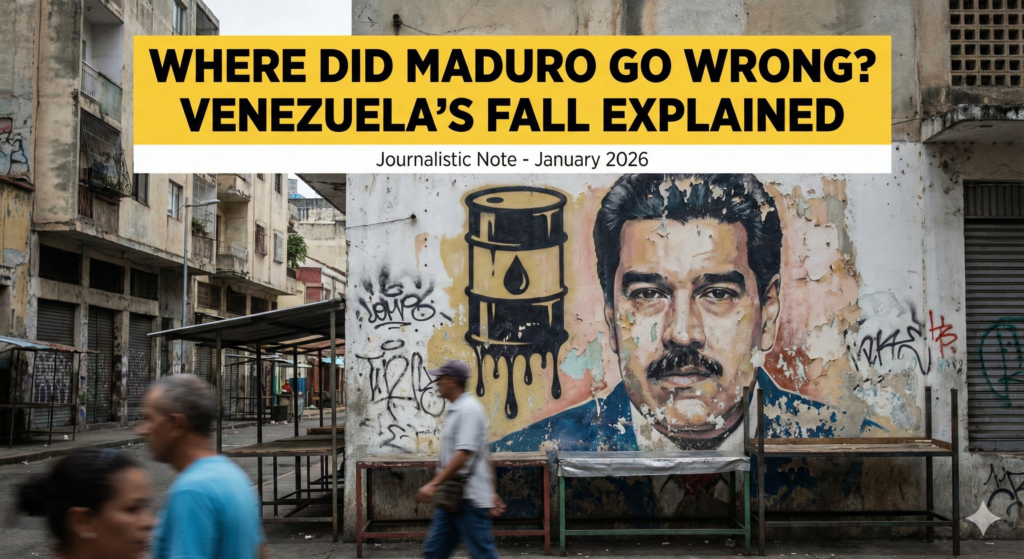
Where Did Maduro Go Wrong?
For decades, Venezuela was considered one of the wealthiest nations in Latin America.
With the world’s largest proven oil reserves, a strong middle class, and regional influence, Venezuela once attracted immigrants, investors, and international respect.
So what happened?
How did a country with so much natural wealth descend into economic collapse, international isolation, and legal scrutiny of its leadership?
The answer lies not in a single decision, but in a dangerous illusion shared by Venezuela’s ruling elite — especially under Nicolás Maduro: the belief that power had become permanent, absolute, and beyond global accountability.
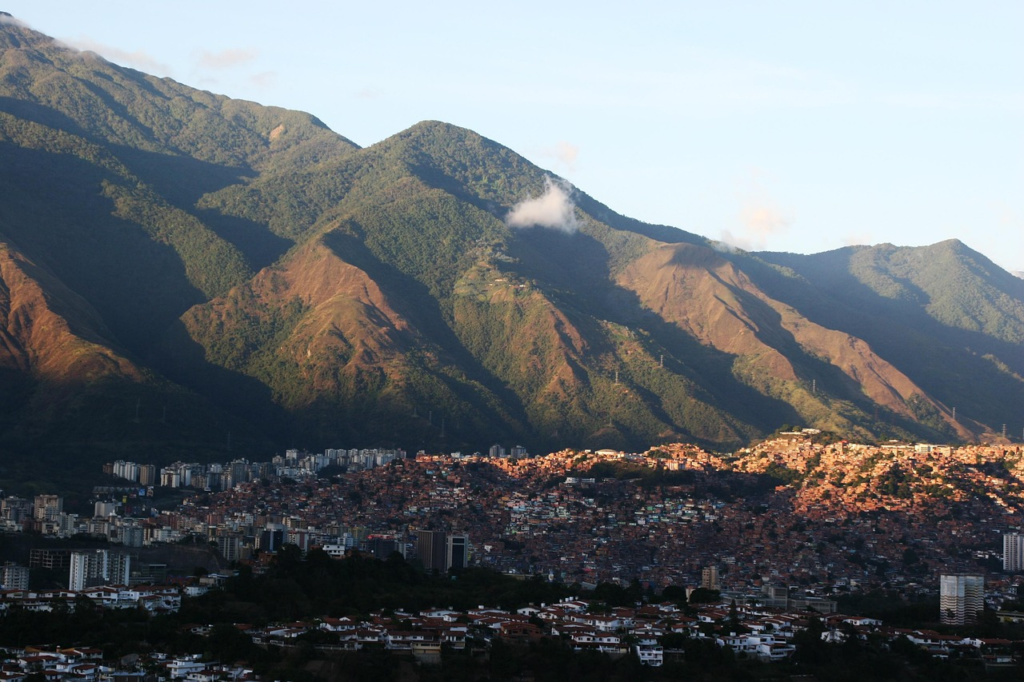
The fatal illusion: believing justice would never reach them
The greatest mistake was not initially economic. It was psychological.
Venezuela’s leadership began to act as if international law, democratic norms, and institutional limits no longer applied. Courts were weakened, oversight mechanisms eroded, and loyalty became more valuable than competence.
History consistently shows that when leaders believe they are untouchable, they stop governing and start commanding. Accountability disappears, mistakes compound, and reality is ignored until collapse becomes inevitable.
No government remains immune forever. Justice may be slow, political, and imperfect — but it does not forget.
Oil wealth: from blessing to dependency
Oil made Venezuela rich, but it also made the state complacent.
Instead of using decades of oil revenue to diversify the economy, strengthen private enterprise, and build resilient institutions, Venezuela doubled down on state control. The government became the primary employer, distributor, and decision-maker.
When oil prices were high, inefficiency was masked. When prices fell, the lack of diversification became fatal. Wealth without discipline created the illusion of endless abundance.
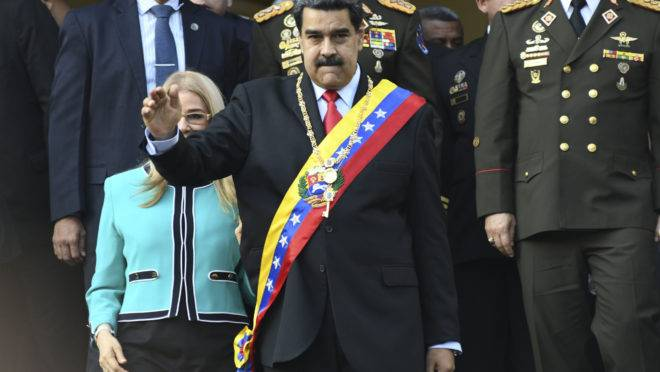
Institutional collapse and corruption
Strong countries rely on strong institutions, not strongmen.
In Venezuela, independent media faced pressure, opposition voices were sidelined, and economic power became centralized. As institutions weakened, corruption expanded and professional management declined.
This process was gradual — and therefore dangerous. Each step seemed manageable on its own, but together they dismantled the safeguards that prevent national failure.
International isolation as a strategic error
Another major miscalculation was treating global criticism as hostility rather than warning.
Diplomatic bridges were burned. Foreign investment disappeared. Sanctions followed — not as the original cause of the crisis, but as a consequence of long-term institutional decay.
Isolation does not protect sovereignty. It weakens it. In a global economy, credibility and cooperation are essential for survival.
When power disconnects from reality
Governments rarely fall because of one bad policy. They fall when leaders stop listening.
Inflation, shortages, mass migration, and social unrest were not sudden events. They were warnings — repeatedly ignored. As loyalty replaced expertise and propaganda replaced transparency, decision-making became detached from everyday life.

The lesson Venezuela leaves the world
Venezuela’s collapse is not only about Nicolás Maduro. It is a global warning.
Natural resources do not guarantee prosperity. Power does not guarantee permanence. Sovereignty does not grant immunity from consequences.
The ultimate mistake was believing that history, law, and accountability could be suspended indefinitely.
They cannot.
Nations do not collapse because they lack resources.
They collapse when institutions fail and leaders believe they are above justice.