
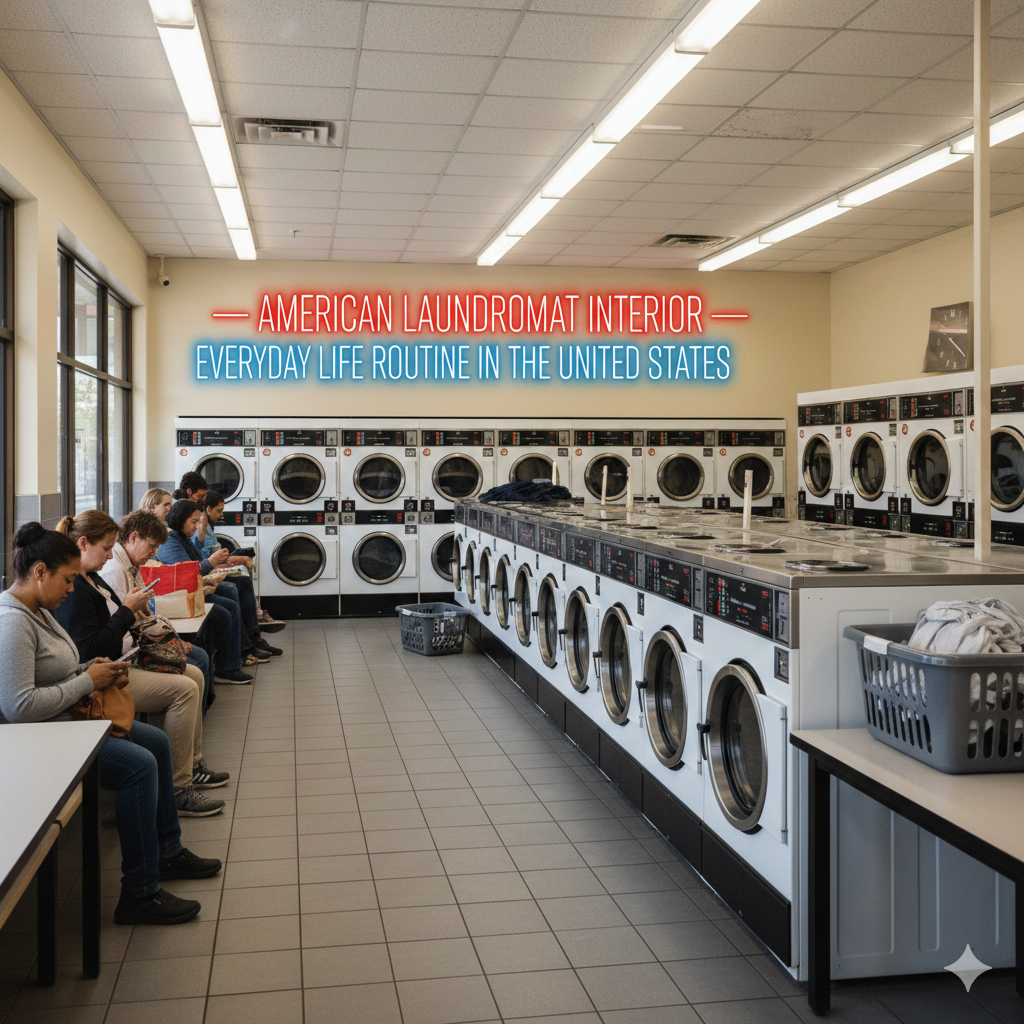
For many immigrants, the first unexpected cultural shock in the United States doesn’t happen at work, school, or the grocery store. It happens inside a laundromat.
In many countries, washing clothes is done at home. But across the U.S., especially in large cities, millions of people rely on public laundromats. Rows of industrial machines, quarters or digital cards, folding tables, and strangers sitting quietly with headphones on — it’s a world of its own.
Real data shows that nearly 30% of American households don’t have a washer or dryer. For newcomers, this reality feels strange at first. Our fictional story follows Ana, who moved from South America and assumed laundry day would be simple. Instead, she found herself calculating time, money, and machine availability.
Each load cost more than expected. Machines stopped mid-cycle. Someone accidentally removed her clothes early. Yet no one apologized — because this is normal.
Over time, Ana noticed something deeper. Laundromats are social spaces without conversation. People share a room, but rarely interact. Everyone respects invisible rules: don’t touch what isn’t yours, don’t stare, don’t complain.
This quiet routine reveals something essential about American culture: efficiency over intimacy. Tasks are done quickly, independently, and without unnecessary interaction.
For immigrants, adapting to this routine is symbolic. It’s not just about washing clothes — it’s about understanding boundaries, time, and personal space in the U.S.
Eventually, the laundromat stops feeling foreign. It becomes part of life. Another small adjustment in a long list of changes that define everyday survival in a new country.