
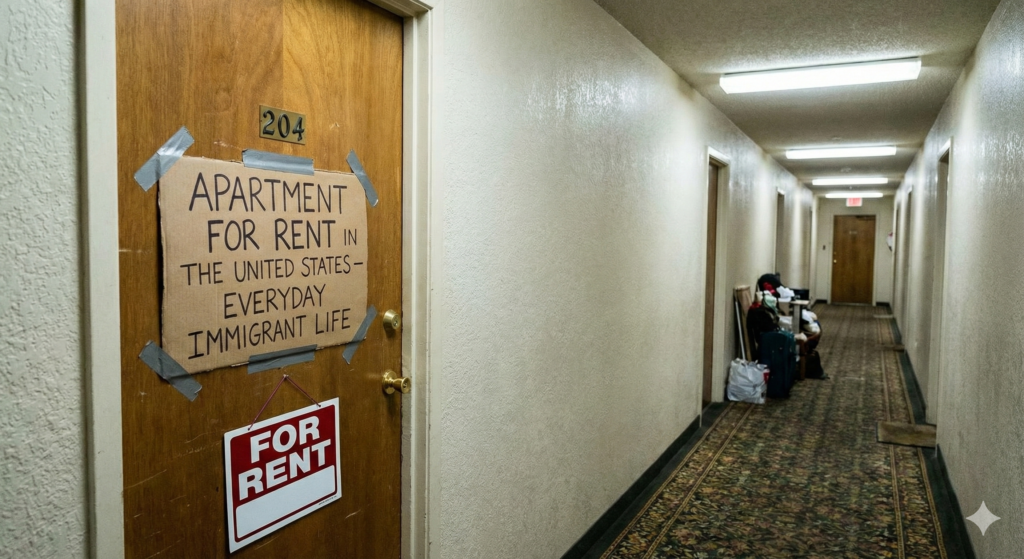
Background check, income proof, deposits — the hidden difficulties behind finding a place to live in America.
For many newcomers, renting an apartment in the United States is one of the first major challenges — and also one of the most unexpected. In most countries, renting is simple: you visit, sign a contract and move in. But in the U.S., the process can feel like applying for a job interview.
The first shock comes with the background check. Landlords want to know everything — criminal record, credit score, rental history, income. For immigrants who are just arriving, these things simply don’t exist. This makes the process slower and sometimes more expensive.
Then comes the income requirement.
Most landlords demand that tenants earn at least 3 times the rent. That means if rent is $1,800 per month, you must show proof of earning $5,400 monthly — even if you plan to share the apartment with family.
If you don’t meet the requirement, landlords may ask for:
— A co-signer with U.S. credit
— A much higher deposit
— Several months of rent in advance
For someone recém-chegado, these conditions are overwhelming.
Even after being approved, the cost of moving in hits hard:
Security deposit, first month’s rent, application fees, pet fees, cleaning fees — everything has a price.
But beyond the financial pressure, renting in the U.S. teaches something crucial about American culture:
🟦 People prioritize rules
🟦 Credit history is everything
🟦 Organization and documentation matter
🟦 Contracts são levados muito a sério
🟦 E principalmente: nada é “por confiança”
The rental system exposes a painful but important truth:
the American Dream begins with paperwork.
Still, despite the challenges, millions of immigrants eventually adapt.
They learn how leases work, build credit, find better options, and discover that stability is possible — but it comes with time, effort and resilience.
Renting in the U.S. isn’t just about finding a home.
It’s about understanding how the country works — and how you will fit into it.